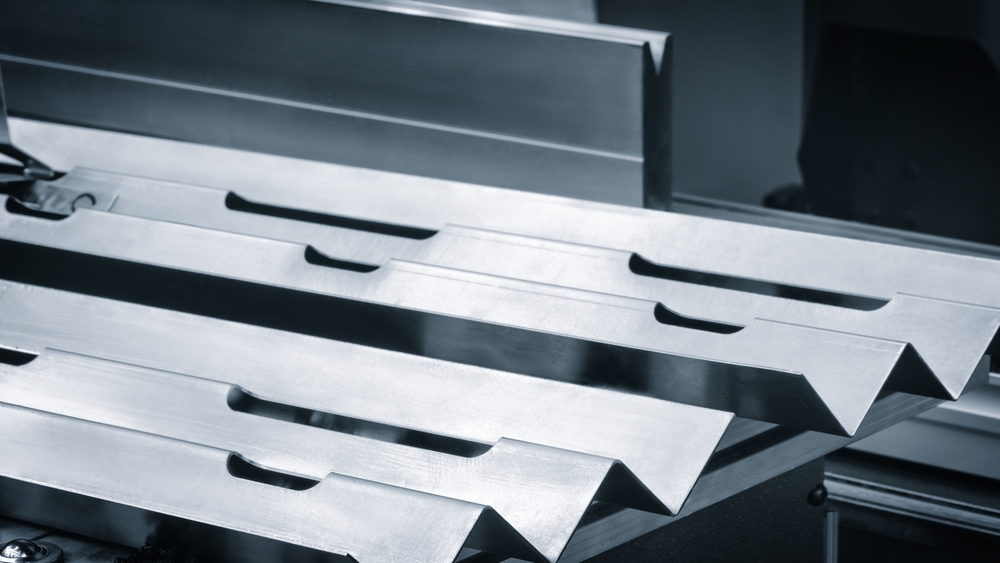
Choosing a material for a stamped metal part involves much more than deciding between steel, aluminum, copper, or another alloy. The material influences how the part forms, how long the tooling lasts, whether the finished component can tolerate its operating environment, and ultimately how much each part costs to manufacture.
Two metals may appear suitable on a drawing yet behave very differently once they enter a stamping press. One may tolerate deep drawing without cracking, while another performs better in a relatively simple blanking operation. Material thickness, temper, tensile strength, grain direction, corrosion resistance, conductivity, and surface requirements can all influence the outcome.
For that reason, understanding how to choose the right material for your metal stamping project should begin with the finished component rather than the raw material itself. What does the part need to do? Where will it operate? How will it be formed? How many pieces are required? What happens to it after stamping?
Answering those questions early can prevent expensive material substitutions, premature tooling wear, forming defects, and unnecessary secondary operations later in production.
Why Material Selection Matters in Metal Stamping
Metal stamping subjects sheet or coil material to controlled forces that cut, bend, draw, pierce, emboss, or otherwise reshape it into a finished component. The properties of the raw material determine how predictably it responds to those forces.
A material that is too hard or brittle for a particular geometry can crack around bends or during drawing. A highly ductile material may form easily but lack the strength required in service. Some alloys provide excellent corrosion resistance but carry a higher material or tooling cost than the application actually requires.
Material choice can influence:
- Part strength and structural performance
- Formability and achievable geometry
- Springback after bending
- Dimensional consistency
- Tool and die wear
- Corrosion resistance
- Electrical and thermal conductivity
- Component weight
- Surface appearance
- Welding and machining characteristics
- Plating and finishing options
- Scrap value and material utilization
- Production speed
- Overall part cost
The objective is therefore not simply to select the strongest or least expensive metal. It is to identify the material whose properties best match the complete manufacturing and performance requirements of the part.
Start With the Requirements of the Finished Part
Before comparing alloys, define what the component must accomplish.
A small electrical terminal has substantially different material requirements from an automotive bracket, appliance component, spring clip, enclosure, or structural reinforcement. Even parts with similar dimensions may require different metals because of their operating conditions.
Several questions help narrow the field quickly.
How Much Strength Does the Part Need?
Strength requirements depend on the forces a component will experience during normal use. A structural bracket may need significant yield and tensile strength, while a cover or shield may primarily need to retain its shape.
Higher strength is not automatically better. Increasing material strength can reduce formability and increase the force required during stamping. This can affect die design, press requirements, springback, and tooling life.
The best material provides sufficient mechanical performance without introducing unnecessary manufacturing difficulty.
How Complex Is the Part Geometry?
Simple flat blanks and lightly formed components allow a broad selection of metals. Parts involving deep draws, tight radii, multiple bends, or extensive deformation place much greater demands on material ductility.
As geometry becomes more aggressive, properties such as elongation, yield strength, anisotropy, and work-hardening behavior become increasingly important.
A metal that blanks cleanly is not necessarily a good deep-drawing material.
Where Will the Component Be Used?
The operating environment can eliminate otherwise attractive materials.
Consider whether the finished part will encounter:
- Moisture or humidity
- Salt or deicing chemicals
- Outdoor weather
- Elevated temperatures
- Industrial chemicals
- Oils or fuels
- Repeated vibration
- Electrical current
- Food or sanitary environments
- Cosmetic exposure
For example, ordinary carbon steel can be economical and mechanically capable but may require plating, painting, powder coating, or another protective finish in a corrosive environment. Stainless steel may cost more initially but can eliminate or reduce the need for additional corrosion protection.
Does Weight Matter?
Weight becomes particularly important in transportation, aerospace, electronics, and portable equipment.
Aluminum offers an attractive strength-to-weight ratio and is substantially lighter than steel. In applications where thousands or millions of components are used, relatively small reductions in individual part weight can become significant.
However, substituting aluminum for steel is rarely as simple as using the same geometry with a different material. Thickness, stiffness, joining methods, wear requirements, and forming characteristics may also need to change.
Understand the Material Properties That Affect Stamping
Material specifications contain a large amount of information, but several properties have an especially direct relationship with metal stamping performance.
Formability and Ductility
Ductility describes a material’s ability to undergo plastic deformation without fracturing. It is particularly important for components involving bends, flanges, draws, and other substantial shape changes.
More ductile metals generally tolerate greater deformation before failure.
This is one reason low-carbon steels are widely used for many stamped components. Certain aluminum, copper, brass, and stainless steel grades can also provide excellent formability when the proper alloy and temper are selected.
For demanding formed parts, evaluating only the broad metal family is not sufficient. Grade and temper can make an enormous difference.
Yield Strength
Yield strength represents the point at which a material begins to deform permanently.
Higher yield strength can be desirable in a finished component, but it can also increase forming loads and springback. When a bent part exits the tooling, elastic recovery causes it to move slightly toward its original shape. Materials with higher yield strength can exhibit greater springback, requiring compensation in the die and process.
This becomes particularly important when tight dimensional tolerances must be maintained.
Tensile Strength
Tensile strength indicates the maximum stress a material can withstand while being stretched before failure.
It is an important performance characteristic, but it should be considered alongside yield strength, elongation, hardness, fatigue behavior, and the geometry of the component.
Selecting material solely by tensile strength can lead to an alloy that meets an engineering number but creates unnecessary forming challenges.
Hardness
Harder materials generally resist scratching, wear, and deformation more effectively. Those same characteristics can increase wear on punches, dies, and cutting edges.
When high-hardness material is required, tooling material, coatings, clearances, lubrication, and maintenance schedules may all need additional consideration.
Elongation
Elongation provides an indication of how far a material can stretch before fracture.
For components that undergo substantial drawing or stretching, higher elongation can provide a larger forming window. However, elongation should not be evaluated in isolation because actual stamping behavior depends on multiple interacting mechanical properties.
Material Thickness
Thickness affects nearly every aspect of the stamping process, including forming force, blanking clearance, bend behavior, stiffness, weight, and material consumption.
Even small thickness changes can matter when production volumes are high.
Using more material than necessary increases coil consumption and part weight. Going too thin can compromise strength, stiffness, dimensional stability, or forming reliability.
Material thickness should therefore be treated as an engineering variable rather than simply a purchasing specification.
Common Materials Used for Metal Stamping
There is no universally superior stamping material. Each metal family provides a different combination of cost, strength, corrosion resistance, conductivity, weight, and manufacturability.
Carbon Steel
Carbon steel is one of the most widely used materials in stamped components because it offers a practical balance of strength, formability, availability, and cost.
Low-carbon steels are especially useful when significant forming is required. Higher-carbon grades can provide increased strength and hardness but generally become more difficult to form.
Common applications include:
- Brackets
- Clips
- Washers
- Automotive components
- Appliance parts
- Industrial hardware
- Structural components
- Housings and supports
Carbon steel can also accept numerous secondary finishes, making it adaptable when additional corrosion resistance or cosmetic performance is needed.
When Carbon Steel Makes Sense
Carbon steel is often a strong candidate when cost efficiency, mechanical strength, and high-volume production are primary considerations and corrosion can be controlled through material selection or finishing.
Stainless Steel
Stainless steel is commonly selected when corrosion resistance, durability, cleanliness, or appearance is important.
Different stainless steel grades behave differently during stamping. Austenitic stainless steels, including commonly specified 300-series grades, can offer useful corrosion resistance and formability, although work hardening must be considered during substantial deformation.
Stainless steel may be appropriate for:
- Food equipment
- Medical components
- Outdoor products
- Industrial equipment
- Automotive parts
- Appliances
- Hardware
- Components exposed to moisture or chemicals
The material generally costs more than conventional carbon steel and can increase tooling demands. In the correct application, however, its durability and corrosion resistance can offset those costs.
Aluminum
Aluminum is valued for its low density, corrosion resistance, thermal conductivity, and favorable strength-to-weight ratio.
It is widely used when reducing component weight provides a meaningful performance or handling advantage.
Potential applications include:
- Automotive components
- Electronics
- Enclosures
- Aerospace components
- Consumer products
- Heat-management components
- Lightweight brackets and supports
Aluminum is softer than many steels, which changes how it interacts with stamping tooling. Galling, surface damage, alloy selection, and lubrication can require careful process control.
Different aluminum alloys and tempers also vary considerably in formability. An alloy that performs well structurally may not be the easiest choice for a highly formed stamping.
Copper
Copper combines excellent electrical conductivity with high thermal conductivity and good corrosion resistance. These characteristics make it particularly valuable for electrical and electronic components.
Common stamped copper products include:
- Electrical contacts
- Terminals
- Connectors
- Bus components
- Conductive clips
- Heat-transfer components
Copper can form well, but its relatively high raw material cost makes scrap reduction and efficient strip layout particularly important.
When electrical performance is the primary function of a component, copper’s higher material price may be justified by capabilities that less conductive metals cannot provide.
Brass
Brass, primarily an alloy of copper and zinc, provides a useful combination of corrosion resistance, formability, conductivity, machinability, and appearance.
It is frequently found in:
- Electrical components
- Decorative hardware
- Plumbing components
- Fasteners
- Connectors
- Instrumentation
- Consumer products
Specific brass alloys vary in zinc content and mechanical properties, so the exact grade should be matched to the forming and service requirements.
Specialty Alloys
Some applications require materials beyond common steels, aluminum, copper, or brass.
Nickel alloys and other specialty metals may be used when a component needs exceptional heat resistance, chemical resistance, electrical properties, or mechanical performance.
These materials can be considerably more expensive and more challenging to process. Tooling strategy and material utilization therefore become especially important.
Consider the Specific Metal Stamping Process
The intended stamping operation should influence material selection from the beginning.
Different processes place different stresses on the raw material.
Blanking and Piercing
Blanking and piercing involve shearing material rather than extensively reshaping it.
Important considerations include hardness, material thickness, burr requirements, edge quality, die clearance, and tooling wear.
A harder material may require greater press force and accelerate cutting-edge wear.
Bending and Forming
Bending requires the material to deform around a radius without cracking while producing the required final angle.
Key considerations include:
- Bend radius
- Material thickness
- Grain direction
- Yield strength
- Ductility
- Springback
A very tight bend that works in one material may not be practical in another without changing the radius or material condition.
Deep Drawing
Deep drawing places considerably greater demands on sheet material. During the process, a flat blank is drawn into a die cavity to produce a cup, shell, enclosure, or similarly shaped component.
Material flow must be carefully controlled to avoid tearing, wrinkling, excessive thinning, or other defects.
Deep-drawing applications typically require close attention to ductility, elongation, work-hardening characteristics, grain structure, lubrication, and blank geometry.
Progressive Die Stamping
In progressive die stamping, coil stock moves through multiple die stations, with individual operations occurring at successive points until the finished part is separated from the strip.
Material consistency is particularly important because variations in thickness, hardness, or mechanical properties can affect multiple operations across the die.
For high-volume progressive stamping, seemingly minor material differences can become significant when multiplied across hundreds of thousands or millions of components.
Factor In Corrosion Resistance Early
Corrosion resistance should be evaluated according to the actual operating environment rather than a generic requirement for a “corrosion-resistant” part.
Indoor components in a controlled environment have different needs from components exposed to road salt, rain, chemicals, or marine conditions.
There are two broad approaches.
The first is to select a material with inherent corrosion resistance, such as an appropriate stainless steel or aluminum alloy.
The second is to use a more economical base material and apply a protective finish.
Depending on the component, finishing options may include:
- Zinc plating
- Nickel plating
- Powder coating
- Painting
- Passivation
- Anodizing
- Other application-specific coatings
The lowest raw material price does not always produce the lowest finished-part cost. If a less expensive metal requires extensive finishing, handling, inspection, and transportation between operations, a more corrosion-resistant base material may be economically competitive.
Think About Electrical and Thermal Requirements
Mechanical performance receives much of the attention during material selection, but some stamped parts perform an electrical or thermal function.
Copper is the obvious example. Its excellent electrical conductivity makes it a natural candidate for contacts, terminals, and other current-carrying components.
Brass may be selected where adequate conductivity must be balanced against strength, formability, cost, or other mechanical requirements.
Aluminum also provides useful thermal and electrical conductivity at a lower density.
When conductivity matters, material selection should consider the complete current path, contact resistance, temperature rise, joining method, surface treatment, and long-term environmental exposure rather than conductivity values alone.
Evaluate Material Compatibility With Secondary Operations
Stamping is often only one stage in a component’s manufacturing sequence.
A stamped part may subsequently require welding, machining, tumbling, deburring, plating, coating, assembly, or another finishing operation. Material choice can determine how efficiently those steps can be performed.
For example, a material that stamps successfully but creates difficulties during welding may not be the best overall choice for a welded assembly.
This is particularly important when combining manufacturing capabilities such as metal stamping, wire forming, tumbling and finishing, welding, and machining. Evaluating the complete process route can reveal opportunities to simplify production and avoid designing a part around one operation while creating problems for another.
Welding
If a stamped component will be welded, consider alloy composition, thickness, heat input, distortion, joint design, and the selected welding process.
The stamping and welding requirements should be evaluated together rather than independently.
Machining
Some stamped parts require drilled, tapped, milled, turned, or otherwise machined features after forming.
Machinability varies considerably between metals and even between grades within the same metal family. When machining represents a meaningful portion of the finished component, its impact on cycle time and tooling should be included in material selection.
Tumbling and Finishing
Tumbling can help deburr, smooth, clean, or prepare stamped parts for subsequent finishing operations.
Material hardness, part geometry, surface requirements, and edge specifications influence how a component responds to these processes.
If the finished part has stringent cosmetic requirements, surface protection may need to begin before the material ever enters the press.
Do Not Ignore Surface Finish Requirements
A component hidden inside a machine and a visible consumer-product component can have identical mechanical requirements but very different material specifications.
Cosmetic parts may require strict control of:
- Scratches
- Tool marks
- Surface texture
- Staining
- Burrs
- Handling damage
- Coating adhesion
- Visible grain or finish
Some materials can arrive with protective films or specialized surface finishes. Those requirements should be communicated early because they can affect material sourcing, feeding, tooling, handling, and packaging.
Balance Material Cost Against Total Manufacturing Cost
Raw material price is important, particularly in high-volume stamping, but price per pound is only part of the economic equation.
Consider two hypothetical materials. Material A costs less per pound but requires slower production, more frequent die maintenance, a protective coating, and higher scrap. Material B costs more initially but stamps consistently and requires no additional corrosion treatment.
Material A may appear cheaper on a purchasing spreadsheet while producing a more expensive finished component.
A better comparison includes:
Material cost + scrap + tooling impact + cycle time + secondary operations + quality requirements + expected service performance.
This is the total-cost perspective that matters in production.
Material Utilization Can Have a Major Impact on Part Cost
Stamped components are often produced from coil or sheet, and not every portion of that material becomes part of the finished product.
The remaining skeleton, carrier strip, slugs, and trim become scrap.
Part orientation and strip layout can therefore materially affect cost, particularly when expensive alloys are involved.
A small improvement in material utilization may seem insignificant during prototyping. At production scale, reducing scrap by even a few percentage points can produce substantial savings.
This is why part geometry, nesting, carrier requirements, coil width, and tooling design should be evaluated together.
Consider Production Volume Before Finalizing the Material
Production volume changes the economics of material selection.
For a prototype or low-volume run, the difference between two material options may represent only a modest amount of money. At high volumes, even a small difference in material consumption per component can have a significant annual impact.
High-volume programs also place greater emphasis on consistency.
A material that varies substantially between coils can create production interruptions, dimensional variation, accelerated tool wear, or higher rejection rates. Material specifications therefore need to control the properties that actually affect the stamping process.
Material Grade and Temper Matter as Much as the Metal Family
Specifying “stainless steel” or “aluminum” is rarely precise enough for a production stamping program.
The exact grade and condition can significantly change how a material behaves.
Two aluminum alloys may differ in strength, elongation, corrosion resistance, and response to forming. Likewise, stainless steel grades can vary in work-hardening behavior, corrosion performance, magnetism, and formability.
Temper is equally important.
Cold working can increase strength and hardness while reducing ductility. A harder temper may improve the final component’s mechanical properties but make complex forming much more difficult.
Material should therefore be specified using the appropriate grade, temper or condition, thickness, and relevant mechanical-property requirements.
Account for Grain Direction
Sheet and coil metals develop directional characteristics during rolling.
This means a material may not behave identically in every direction. Bend orientation relative to the rolling direction can influence cracking risk, minimum bend radius, and dimensional behavior.
For simple parts, the effect may be minor. For components involving tight bends or demanding forming operations, grain direction can become an important design consideration.
It can also create a tradeoff between formability and material utilization. Rotating a component within the strip may improve nesting efficiency but place a critical bend in a less desirable orientation.
These decisions are best evaluated before tooling is finalized.
Prototype With Production-Representative Material
A prototype is most useful when it reflects actual production conditions.
Testing a component in a softer or more readily available alloy and then changing material for full-scale production can hide potential problems with cracking, springback, forming loads, or dimensional consistency.
Whenever practical, prototypes and initial trials should use the intended production grade, temper, and thickness.
This is especially valuable for parts with:
- Deep draws
- Tight bends
- Critical dimensions
- Complex progressive operations
- High springback
- Cosmetic surfaces
- Difficult joining requirements
Early testing can expose issues while design modifications are still relatively inexpensive.
Common Material Selection Mistakes to Avoid
Many stamping problems originate before the first production part reaches the press.
Choosing Material Based Only on Price
The cheapest raw material can become expensive once tooling wear, scrap, coatings, slower production, and secondary processing are considered.
Over-Specifying Strength
A stronger material is not necessarily a better material. Excessive strength can increase forming forces, springback, and tooling demands without improving the actual function of the part.
Ignoring Formability
A material may satisfy every final performance requirement yet be impractical to stamp into the specified geometry.
Manufacturing feasibility should be evaluated alongside service requirements.
Specifying Only the General Material Type
“Steel,” “stainless,” and “aluminum” leave too many variables undefined. Grade, temper, thickness, and relevant mechanical properties should be specified appropriately for production.
Selecting Material Without Considering Finishing
Plating, coating, welding, tumbling, machining, and assembly can all change the economics and feasibility of a material choice.
Waiting Until Tooling Is Designed to Discuss Material
Changing materials after the die has been engineered can create problems with clearances, springback, forming forces, lubrication, and part dimensions.
Material selection and tooling development should be coordinated from the beginning.
A Practical Framework for Choosing a Metal Stamping Material
When several materials appear viable, a structured evaluation helps separate essential requirements from preferences.
Start by defining the non-negotiable performance requirements: strength, corrosion resistance, conductivity, temperature exposure, weight, or other application-specific characteristics.
Next, evaluate manufacturing requirements. Determine how much forming the component requires, whether tight bends or deep draws are present, and what stamping process will be used.
Then examine secondary operations. Identify whether the component must be welded, machined, tumbled, plated, coated, heat treated, or assembled.
Finally, compare the economics at the expected production volume.
A useful sequence is:
- Define the component’s function and operating environment.
- Establish mechanical and physical performance requirements.
- Review geometry and forming severity.
- Identify suitable material families.
- Narrow the selection to specific grades and tempers.
- Determine the appropriate thickness.
- Evaluate stamping and tooling implications.
- Review welding, machining, and finishing requirements.
- Estimate material utilization and scrap.
- Compare total finished-part costs.
- Validate the selection through prototypes or production trials when necessary.
Following this process keeps material decisions tied to the finished component rather than one isolated specification.
Involve Your Metal Stamping Manufacturer Early
One of the most effective ways to improve a stamped component is to involve the manufacturer before the design is completely locked.
An experienced stamping team can review material specifications alongside bend radii, tolerances, hole locations, draw depths, edge conditions, secondary operations, and anticipated production volumes.
Sometimes the original material is the correct choice. In other cases, a different grade, temper, or thickness can provide equivalent performance with better formability or lower total cost.
Design-for-manufacturability discussions can also identify opportunities to consolidate operations. A feature originally intended for machining, for example, may potentially be incorporated into the stamping process. A material or joint change might simplify welding. Adjusting a radius could reduce cracking risk without affecting component function.
Those changes are generally easier and less expensive before tooling enters production.
Choosing the Right Material for a Reliable Stamped Component
Learning how to choose the right material for your metal stamping project ultimately means balancing several competing priorities rather than optimizing a single property.
The material must perform once the component is in service, but it must also move successfully through the manufacturing process. Strength, ductility, corrosion resistance, conductivity, weight, thickness, grade, temper, tooling demands, scrap, and secondary operations all contribute to the decision.
Carbon steel may provide the best economics for one component. Stainless steel may be preferable when corrosion resistance dominates. Aluminum can reduce weight, while copper or brass may be necessary when conductivity is central to the part’s function.
The most successful projects consider those factors before tooling and production decisions become difficult to change.
For companies sourcing stamped components, working with a manufacturing partner that can evaluate metal stamping, wire forming, tumbling and finishing, welding, and machining as part of the same production strategy can also help identify the material and process combination that delivers the required performance without unnecessary manufacturing cost.
Ready to start your metal stamping project? Give our team a call today, you can reach us at (864) 296-1300.
Frequently Asked Questions About Choosing Materials for Metal Stamping
What Is the Best Material for Metal Stamping?
There is no single best material for every metal stamping application. Carbon steel is commonly selected for its combination of strength, formability, availability, and cost. Stainless steel offers greater corrosion resistance, aluminum reduces weight, and copper provides excellent electrical conductivity.
The best choice depends on the component’s geometry, operating environment, mechanical requirements, production volume, and secondary operations.
What Is the Most Cost-Effective Metal for Stamping?
Carbon steel is often one of the most cost-effective options for high-volume stamped parts, particularly when moderate-to-high strength and good formability are required.
However, raw material price should not be evaluated independently. A material that requires expensive finishing or produces excessive scrap may have a higher total finished-part cost than a more expensive alternative.
Is Stainless Steel Good for Metal Stamping?
Yes. Many stainless steel grades can be stamped successfully and are widely used for components requiring corrosion resistance, strength, durability, or a clean appearance.
The specific grade and condition matter because stainless steels vary in formability and work-hardening behavior. Tooling and lubrication also need to account for the material’s characteristics.
Is Aluminum Easy to Stamp?
Many aluminum alloys can be stamped effectively, but formability varies by alloy and temper. Aluminum’s relatively low weight and natural corrosion resistance make it useful for automotive, electronics, aerospace, and consumer-product applications.
Because aluminum behaves differently from steel, die design, lubrication, surface protection, and galling should be considered during process development.
What Material Is Best for Deep Drawing?
Highly formable low-carbon steels are widely used for deep-drawn components, while suitable grades of stainless steel, aluminum, copper, and brass can also perform well.
The ideal material depends on draw depth, geometry, wall-thickness requirements, mechanical properties, and the number of forming stages. Ductility and work-hardening behavior are particularly important.
How Does Material Thickness Affect Metal Stamping?
Material thickness affects required press force, die clearance, bend radius, stiffness, weight, blanking behavior, and material consumption.
Thicker material can provide greater stiffness or load-bearing capacity but generally requires more forming force and raw material. The optimal thickness is the minimum that reliably satisfies both manufacturing and performance requirements.
Does the Temper of a Metal Affect Stamping?
Yes. Temper can substantially influence strength, hardness, ductility, springback, and formability.
A harder temper may provide desirable final mechanical properties but make severe forming operations more difficult. The correct temper should therefore be selected according to both manufacturing requirements and final component performance.
Why Does Grain Direction Matter in Stamped Parts?
Rolling creates directional characteristics in sheet and coil material. Bending relative to the grain direction can influence cracking, minimum bend radius, and dimensional behavior.
Grain orientation becomes especially important when a stamped component contains tight bends or other demanding formed features.
Should Material Be Selected Before the Stamping Die Is Designed?
Ideally, yes. The intended material, grade, temper, and thickness should be established or substantially defined before final die engineering.
Material properties influence die clearances, forming forces, bend compensation, lubrication, tooling materials, and other process decisions. A major material change after tooling has been designed can require expensive modifications.
Can a Metal Stamping Manufacturer Help Choose the Material?
Yes. Early collaboration with an experienced metal stamping manufacturer can help determine whether the proposed material is appropriate for the part geometry, tolerances, production volume, tooling strategy, and secondary operations.
A manufacturer can also identify alternative grades, tempers, thicknesses, or process changes that may improve manufacturability while maintaining the component’s required performance.